
Charles Lauzier, customer Success Story
“For this project, there was data collection and structuring to be carried out.
The advantage of this support offered by Cetim was that we were able to discuss our specifications with the people who were actually going to carry out the work” – Jean‑Yves Gannard, President of Charles Lauzier
Determined to become a 21st-century foundry, the company worked with Cetim to evaluate its carbon footprint.
When Jean‑Yves Gannard talks about the company he took over two years earlier, the president of Charles Lauzier clearly states his ambition: “I want, at my level, to contribute to reindustrialization in France and turn it into a 21st‑century foundry,” he says.
His objective: to focus in particular on the CSR dimension, and especially on the company’s carbon footprint, so that it becomes attractive to young talent, demonstrates its efforts to customers, and ultimately “targets new markets for which this aspect is important,” he explains.
To achieve this, the company director decided to call on Cetim through its Quatrium* support programs, “which seemed suited both to our structure and to our needs.”
A significant effort on energy
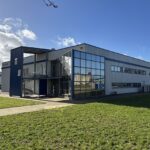
Founded in 1936, Charles Lauzier is an aluminum foundry specializing in gravity shell casting, complemented by machining activities. Based in Saint‑Georges‑d’Espéranche, in France, since 2002, the company employs 40 people and generates an annual revenue between 4 and 5 million euros. Ninety percent of its business is carried out in France.
“We work for all sectors except the automotive industry, with a specialization in small parts ranging from a few grams to around ten kilograms, produced in medium‑sized series.”
The distinctive feature of this foundry — ISO 9001 certified since 2008 and producing around one thousand different parts per year — is its complete integration of the production chain: from the design office to the foundry, followed by finishing, heat treatment, machining, painting, and even pre‑assembly of components.
“This structure allows the design office to work very early with customers to design the parts together and adapt them to our technology,” explains the manager.
Since Jean‑Yves Gannard’s acquisition of the company, the initial efforts have focused on energy savings. “Foundry work is an energy‑intensive activity. Electricity accounts for 35% to 40% of the consumption required to melt aluminum,” the director notes.
The company has already eliminated the use of gas in favor of electric furnaces. “To go further, we have an action plan focused on energy savings. We are working on adjusting the energy consumption of our production equipment, on lighting, on heating… Upstream, I also wanted to work on our carbon footprint.”
This is an essential point for Jean‑Yves Gannard, who believes that “today, you cannot be an entrepreneur without taking into account our environment — social, societal, and climatic.”
Supported by experts
Why Quatrium? “This choice was motivated by the possibility of working directly with Cetim’s experts, who carry out the analysis themselves rather than going through external consulting firms,” notes Jean‑Yves Gannard.
The support lasted nearly four months, with the goal of collecting and structuring internal data, contacting suppliers (particularly aluminum suppliers) to obtain their impact data, interpreting the figures, and measuring the broadest possible scope. Despite the difficulty of obtaining information from certain suppliers and precise end‑of‑life data from final customers, the process was made easier by the company’s existing data culture, including the use of an ERP system and reliable energy measurements.
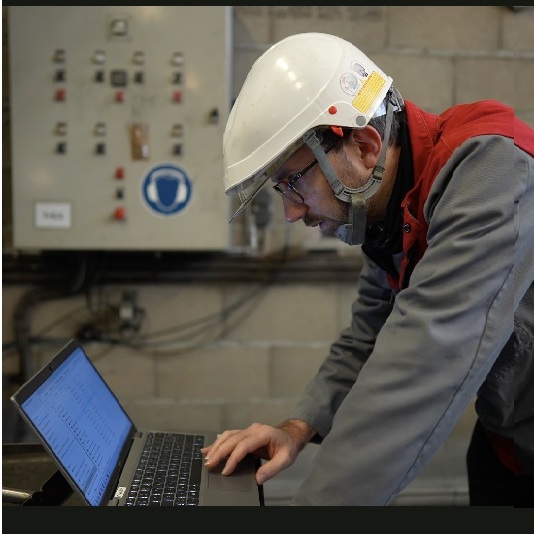
Concretely, the Quatrium support enabled the company to access the expertise of Cetim’s energy team, who came to instrument the energy‑intensive equipment in the foundry workshop to carry out accurate measurements. “With these data, we were able to make recommendations for a more efficient use of equipment, as well as suggestions for investments in less energy‑consuming machines,” explains Alexis Dequidt, energy specialist at Cetim. “Throughout the support process, we made sure to communicate as regularly as possible with our on‑site contacts so they could take ownership of the energy‑optimization topics and the carbon‑footprint methodology, ensuring it becomes sustainable over time.”
A precise management tool
After an initial phase with Cetim based on 2024 data, the company adopted the method and the tool, and carried out the exercise again on its own using data from the first half of 2025. For now, the foundry does not intend to set specific targets, but it now has a precise management tool that allows it to measure the impact of every action taken on its carbon footprint.
In particular, the analysis identified several areas for improvement, including aluminum sourcing, subcontracting, transport, and energy management.
The company has already launched several concrete initiatives to continue its transition. “Tests are underway to increase the use of recycled secondary‑fusion aluminum, which could reduce the carbon footprint of the raw material by a factor of three or four,” announces Jean‑Yves Gannard.
At the same time, the company has signed a new energy contract for 2026 that includes a larger share of renewable energy. Finally, Charles Lauzier plans to work more closely with its suppliers on their own carbon footprints and, in the long term, involve its customers in a sustainable co‑design approach.
* Quatrium is the name of the Cetim’s support program dedicated to the industrial transformation of French manufacturing companies